Quick Answer
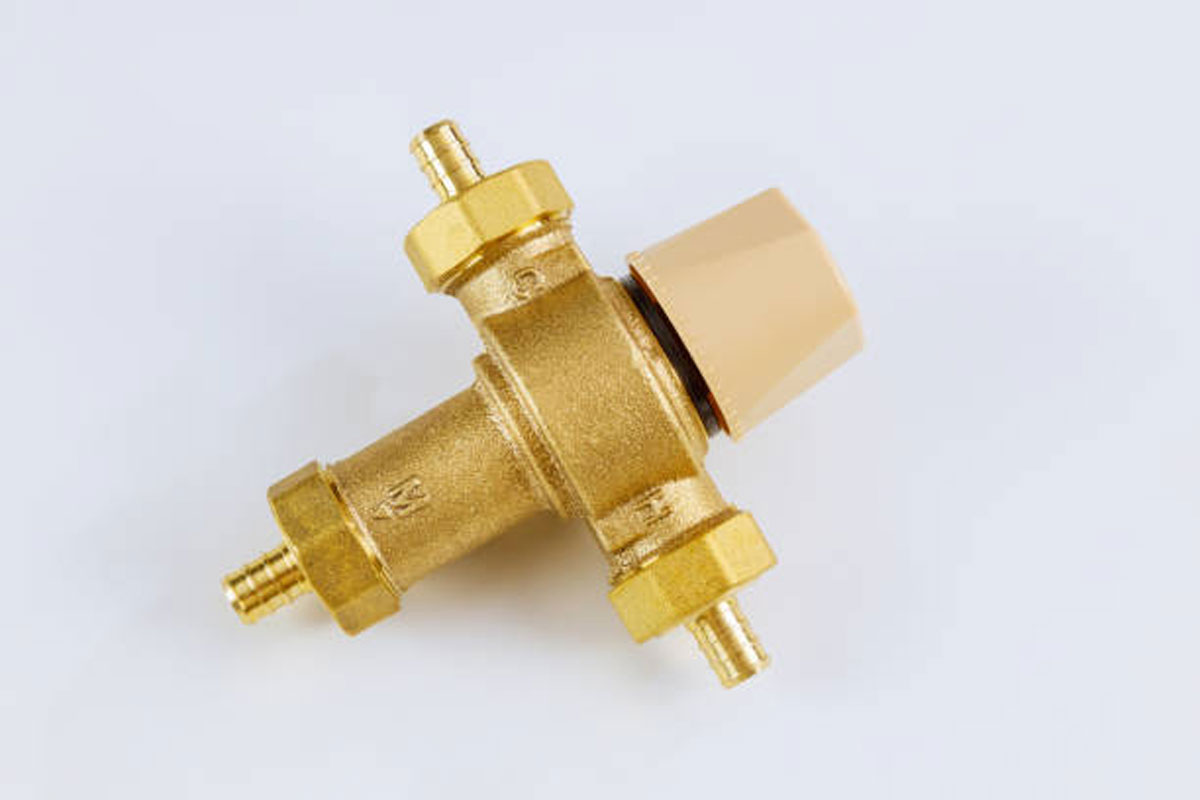
On most systems the tempering valve location is on the hot water outlet pipe at the top of the storage tank, within a short run of the unit: a small brass body with a coloured cap, sitting where the hot outlet meets a cold water tee. On instantaneous (continuous flow) units it sits on the hot outlet pipe beneath the unit, near the isolation valves, unless the unit is preset to deliver 50°C directly.
50°C
Max Bathroom Outlet Temperature
60°C+
Tank Storage Temperature
5 Years
Maximum Replacement Interval
Licensed
Plumbers Only
Finding the Valve on Storage Tank Systems
On an electric or gas storage tank the tempering valve location is almost always within arm’s reach of the top of the cylinder. The tank stores water at 60°C or above to control Legionella bacteria, and the valve blends in cold water so bathroom outlets never exceed 50°C, as Australian Standard AS/NZS 3500.4 requires.
What You Are Looking For
A brass body about the size of a fist with three pipe connections: hot in from the tank, cold in from a tee, and mixed water out. Most have a coloured plastic cap covering the adjustment screw.
Follow the Hot Outlet
Trace the pipe leaving the top of the tank. The first brass fitting with a cold water pipe joining it from the side is the valve. It is often within half a metre of the tank.
Check Under the Insulation
Outdoor tanks usually have foam lagging on the pipework. The valve may be hidden inside it, so look for a bulge or a taped section near the top.
Solar and Heat Pump Systems
On split solar and heat pump systems the valve is normally on the hot outlet of the ground-level tank. Roof-mounted close-coupled solar systems usually have it at ground level near the cold feed or booster.
Why the kitchen tap runs hotter
The 50°C limit applies to fixtures used for personal hygiene: showers, baths and bathroom basins. Kitchen and laundry taps may be fed from before the valve, which is why they can run noticeably hotter than the bathroom.
Locating the Valve on Instantaneous Systems
For continuous flow systems the tempering valve location is lower and easier to miss. These wall-mounted units heat water as it passes through, so there is no tank, and the valve is fitted to the pipework at the base of the unit.
Look Beneath the Unit
The cold inlet and hot outlet run into the bottom of the unit alongside the gas or power connection. Where a tempering valve is fitted, it sits on the hot outlet, typically just below the isolation valves.
Check the Data Plate
Some units are factory preset to deliver 50°C and are approved for bathroom supply without a separate valve. The data plate or manual will say so. If it does not, expect a valve in the pipework.
Do Not Rely on the Controller
A kitchen or bathroom controller pad lets you choose the temperature at the unit, but the tempering valve still caps what reaches the bathroom. If the controller is set high and the shower stays lukewarm, the valve is the likely reason.
Adjusting or replacing a tempering valve is licensed plumbing work in Queensland. This article helps you find and identify the valve; it is not a guide to working on it.
Diagrams for Common Hot Water Heaters
Use these simplified diagrams to picture the tempering valve location before you head outside. Pipe routes vary from home to home, but the logic is always the same: hot from the heater, cold from a tee, tempered water on to the bathrooms.
COLD SUPPLY
STORAGE TANK
stores at 60°C or above
HOT OUTLET 60°C+
KITCHEN / LAUNDRY (untempered)
TEMPERING VALVE
hot in, cold in, mixed out
TO BATHROOMS, MAX 50°C
Cold
Hot
Tempered
Storage tank system. The valve sits on the hot outlet at the top of the tank, with a cold tee feeding its second inlet. Bathrooms receive tempered water; kitchen and laundry lines may branch off before the valve.
EXTERNAL WALL
CONTINUOUS FLOW
UNIT
heats water on demand
data plate: check preset temp
COLD IN
isolation valves
TEMPERING VALVE
TO BATHROOMS, MAX 50°C
Some units are preset to
deliver 50°C directly and
may not need a separate
valve. Check the data plate.
Continuous flow system. The valve sits on the hot outlet beneath the unit, near the isolation valves. Units preset to 50°C may be approved without one; the data plate confirms it.
Why Access is Important for Repairs
A tempering valve is a working part with a thermostatic element that wears out. Australian Standard AS 4032.3 calls for tempering valves to be replaced at intervals not exceeding five years, and a plumber cannot test, adjust or replace one they cannot reach.
- Five-year replacement. The element inside is not serviceable, so the whole valve is swapped. Clear access turns a quick job into a quick job, rather than a pipework rebuild.
- Blocked inlet filters. Debris on the hot inlet filter is a common cause of weak or lukewarm hot water. Clearing it needs the unions undone.
- Fault finding. Water that is too hot, too cold or swinging between the two often traces back to the valve. Being able to test it in place saves diagnosis time.
- Boxed-in or buried valves. Valves hidden behind cladding, under decking or inside cupboards add labour to every future visit. Leave clear working room around them.
- Compliance. When a hot water system is replaced, a compliant tempering valve is part of the installation and must be certified by a licensed plumber.
Our licensed plumbers install, test and replace tempering valves on every type of system as part of our hot water services, and any other plumbing issue found on the same visit can be handled by the same team.
If your bathroom water is lukewarm, scalding or unpredictable, contact our team and we will check the valve first.
Please note: This article is general information only. Plumbing standards and state regulations can change, and every installation is different. Adjusting or replacing a tempering valve is licensed work in Queensland; for advice specific to your system, speak with a licensed plumber.
Frequently Asked Questions
Common questions about tempering valves on Brisbane hot water systems.
Can I adjust the tempering valve myself?
No. In Queensland, adjusting or replacing a tempering valve is licensed plumbing work, and the 50°C limit at bathroom outlets is a legal requirement rather than a preference. The cap on the valve covers an adjustment screw, but turning it without testing the outlet temperature risks scalding, particularly for children and older people.
How do I know if my tempering valve has failed?
The usual signs are lukewarm water in the bathroom while the kitchen tap runs hot, water that is suddenly far hotter than it should be, or temperature that swings while the shower is running. A blocked inlet filter can also cut the hot water flow to a trickle. A licensed plumber can test the valve in a few minutes and replace it if needed.
Does every hot water system have a tempering valve?
Systems installed since the current standards came in do, and any replacement system in Queensland must be fitted with one or use a heater approved to deliver 50°C directly. Older homes may not have one at all. If you cannot find a tempering valve location on your system and the bathroom water runs very hot, have it checked; adding a valve is a small job that removes a serious scald risk.